
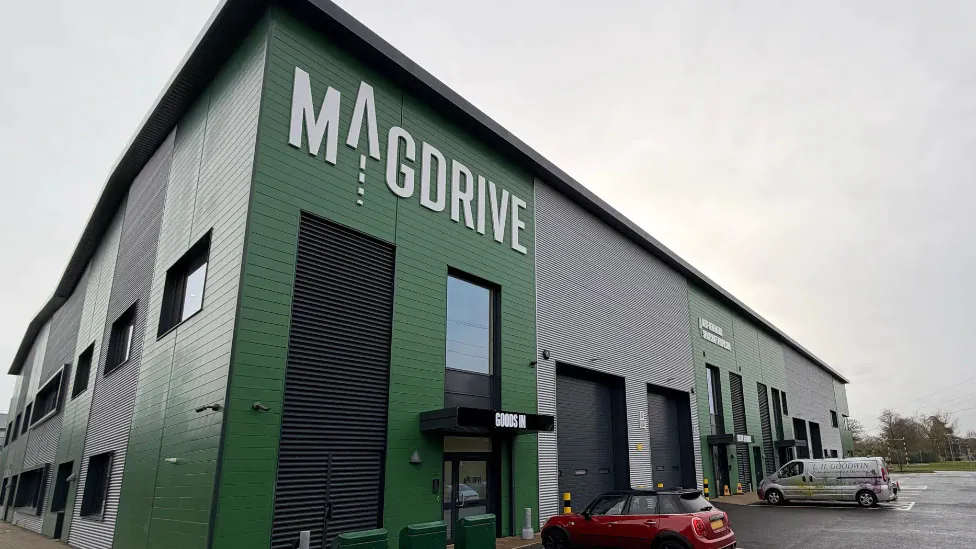

The Disruptive Experimental Electric Propulsion (DEEP) Lab, built by space technology company Magdrive, gives British businesses access to specialist resting facilities for electric propulsion systems – the technology that allows satellites to manoeuvre, maintain their orbits, and travel further into space using less fuel that traditional chemical rockets.
The £3.8 million facility based in Harwell’s BEP0 development has been established with £1.8 million from the UK Space Agency’s Space clusters Infrastructure Fund and £2 million of company investment.
While Magdrive will be its largest user, the 10,000 square foot laboratory is open to start-ups, established aerospace firms and academic researchers across the UK space sector.
Space minister Liz Lloyd said: “From ambitious start-ups to established aerospace firms, this facility will give British companies access to testing capabilities that were previously out of reach. Electric propulsion is shaping the future of how we operate in space, and by investing in infrastructure like this we are ensuring that UK innovators can lead the way.
“By opening its doors to the wider space community, the DEEP Lab will accelerate the pace of discovery and help cement the UK’s reputation as a global leader in space technology.”
A new laboratory that will help UK companies develop and test the engines powering the next generation of satellites has opened at Harwell Science and Innovation Campus.
The Disruptive Experimental Electric Propulsion (DEEP) Lab, built by space technology company Magdrive, gives British businesses access to specialist resting facilities for electric propulsion systems – the technology that allows satellites to manoeuvre, maintain their orbits, and travel further into space using less fuel that traditional chemical rockets.
The £3.8 million facility based in Harwell’s BEP0 development has been established with £1.8 million from the UK Space Agency’s Space clusters Infrastructure Fund and £2 million of company investment.
While Magdrive will be its largest user, the 10,000 square foot laboratory is open to start-ups, established aerospace firms and academic researchers across the UK space sector.
Space minister Liz Lloyd said: “From ambitious start-ups to established aerospace firms, this facility will give British companies access to testing capabilities that were previously out of reach. Electric propulsion is shaping the future of how we operate in space, and by investing in infrastructure like this we are ensuring that UK innovators can lead the way.
“By opening its doors to the wider space community, the DEEP Lab will accelerate the pace of discovery and help cement the UK’s reputation as a global leader in space technology.”